
Death cap Amanita phalloides
deadly poisonous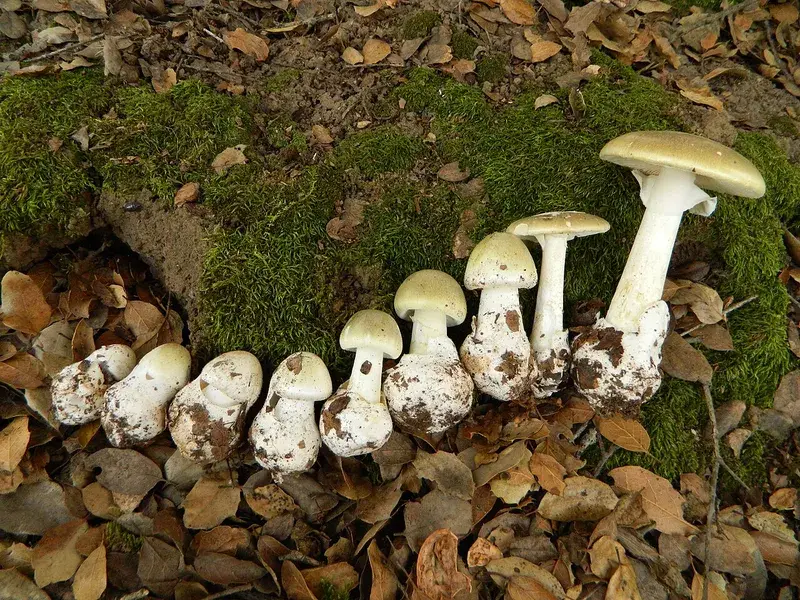

It has a radially fibrous, olive-green cap without veil remains and a lobed, sac-like volva that stands away from the stem; it smells sweetish, not of potatoes.
View on the map
No matching species found.
Amanita citrina Pers. · Amanitaceae
Also: Citron amanita
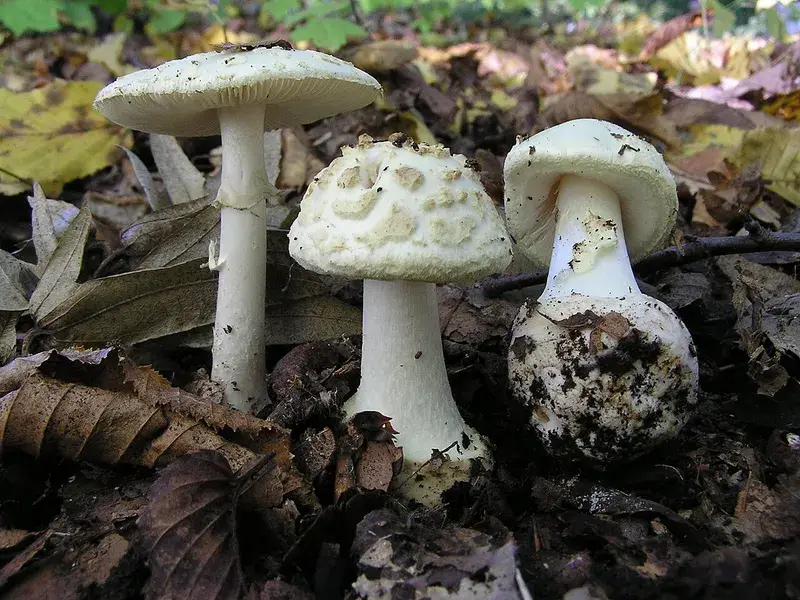
False death cap grows from August to November; host trees: pine, spruce, beech, oak. Poisonous, so never eat it, and call a poison centre at once if you suspect poisoning.
Map for this species Mushroom alert for this species How the mushroom alert works
The false death cap is a pale lemon-yellow Amanita with flaky veil remains on the cap and a spherical bulb with a sharp rim. It smells of raw potatoes.
Poisonous raw and easily mistaken for the deadly death cap; do not eat.
It has a radially fibrous, olive-green cap without veil remains and a lobed, sac-like volva that stands away from the stem; it smells sweetish, not of potatoes.
View on the map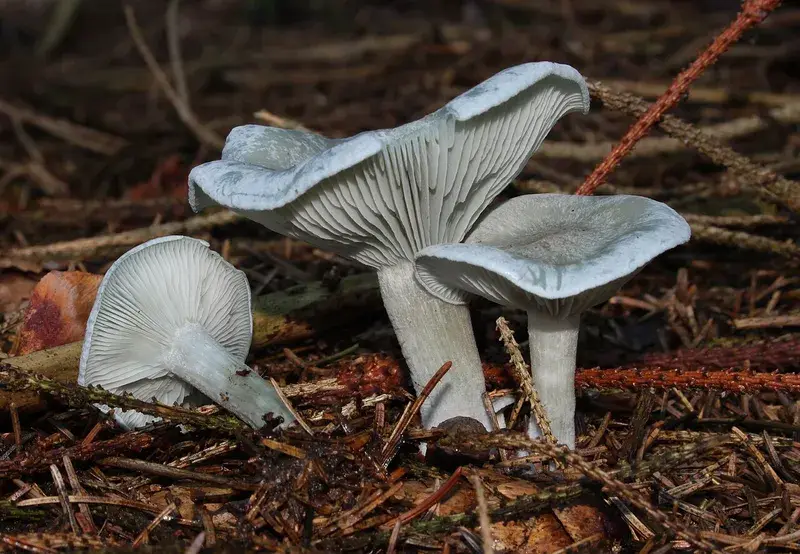
It is blue-green, smells of aniseed and has neither ring nor bulb.
View on the mapAcidic, sandy soils. From the lowlands up into the hills and mountains.
Pine, spruce, beech, oak.
possible good main season
In places as early as June.
The map shows every day where weather, soil and forest currently suit this species. The stronger the orange, the better the conditions. Grey means unsuitable. With the day slider you can look up to 13 days ahead. The map shows grid cells, not exact spots.
Map data: © OSM · CARTO · © Esri, Maxar, Earthstar Geographics, GIS User Community · Weather: Open-Meteo
See False death cap on the map
Mushroom forecast: where conditions are good for foraging now
There are no records per region for this species yet. The country pages lead to all regions with a daily forecast.
Poison centre:
Emergency: 112 · 999
Poison centre:
Emergency: 112
Mushroom advice: DGfM: find a mushroom expert. Certified mushroom experts of the German Mycological Society (DGfM).
Collecting rules: Mushrooms that are not specially protected may be collected in small quantities for personal use unless a protected area or ban applies. Certain specially protected edible species (e.g. cep, chanterelle, birch bolete) may be collected in small quantities for personal use.
Poison centre:
Emergency: 112 · 144
Mushroom advice: Austrian Mycological Society (ÖMG): mushroom advice. Mushroom advice by the Austrian Mycological Society or regional services such as municipal market offices.
Collecting rules: At most 2 kg of mushrooms per person per day unless the forest owner has prohibited collecting; organised collecting events are prohibited. Additional state rules apply (collecting hours, closed seasons), e.g. Carinthia, Tyrol, Vorarlberg, Salzburg.
Not specially protected.
Salzburg: collecting poisonous mushrooms is banned.
Red List Germany: Least concern
No, it is poisonous. Poisonous raw and easily mistaken for the deadly death cap; do not eat. If you suspect poisoning, call the poison centre immediately (numbers for your country below).
In central Europe the season runs from August to November. In places as early as June. Tree partners and habitat: Pine, spruce, beech, oak. Soil: Acidic, sandy soils. Elevation: From the lowlands up into the hills and mountains.
The most important distinction is from Death cap (Amanita phalloides, deadly poisonous): It has a radially fibrous, olive-green cap without veil remains and a lobed, sac-like volva that stands away from the stem; it smells sweetish, not of potatoes. Other lookalikes: Aniseed toadstool.
No substitute for having your finds checked in person. No guarantee of accuracy. Updated: 17.10.2026.
