FungiFindFungiFind

FungiFind › Mushroom species

Russula albonigra

Russula albonigra (Krombh.) Fr. · Russulaceae

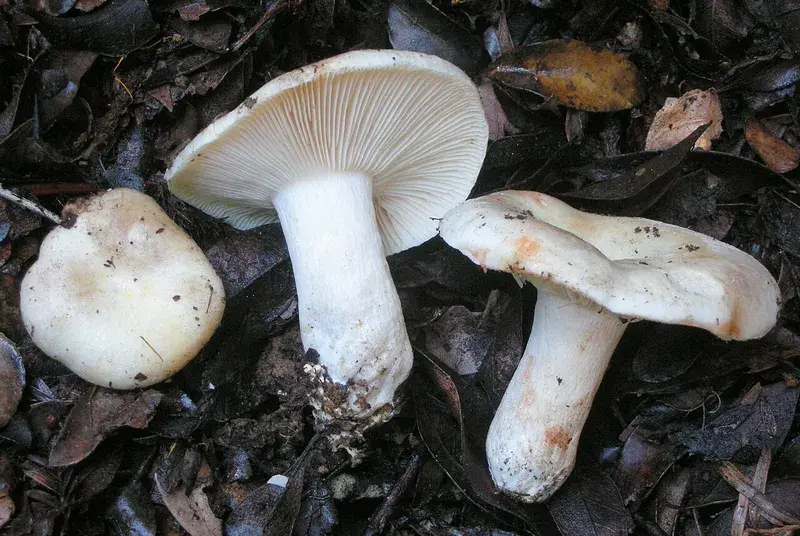
Russula albonigra
Photo: Ron Pastorino (Ronpast) · CC BY-SA 3.0 · Wikimedia Commons
Inedible

Russula albonigra grows from July to October; host trees: spruce, pine, birch. Inedible and not for the table; this page does not replace an in-person check.

Map for this species Mushroom alert for this species How the mushroom alert works

Identification in 5 steps

Russula albonigra is a whitish brittlegill whose flesh quickly turns black where it is cut. It is hot-tasting and inedible.

SeasonJuly to October
Spore printwhite
FamilyRussulaceae
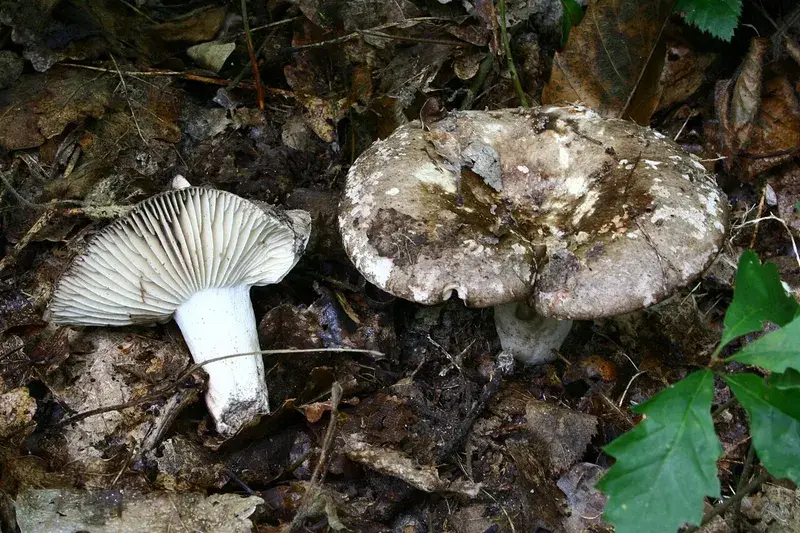
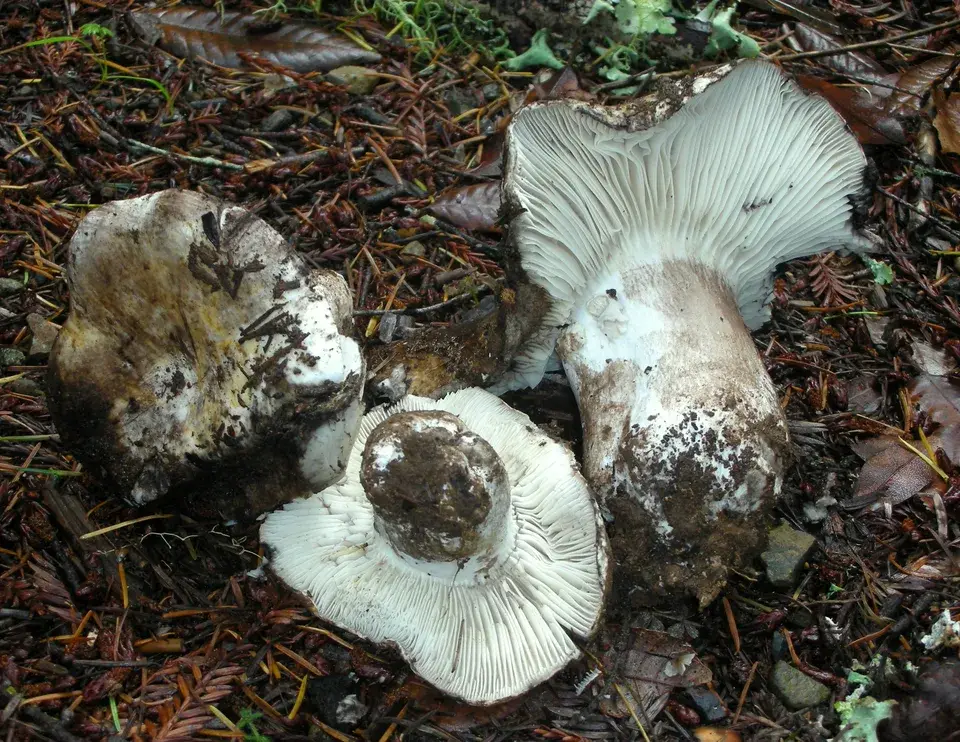
  1. Cap. The cap is 5 to 12 cm wide, cream-white to grey, dull and dry.
  2. Underside. The gills are broad and white, and turn grey.
  3. Stem, ring and volva. The stem is white and firm; there is no ring and no volva.
  4. Smell and taste. It tastes hot with a menthol-like cooling aftertaste; do not taste it.
  5. Flesh and colour change. The flesh turns deep black immediately where it is cut.

Lookalikes

It is hot-tasting and inedible, and blackens strongly and immediately.

Side by side

Russula albonigraCrowded russulaBlackening brittlegill
Cap5 to 12 cm wide, cream-white to grey5 to 12 cm, grey-white to brownish black8 to 20 cm, dirty white when young, later blackish
Undersidegills broad, white, turning greygills very crowded, cream-whitegills thick, very widely spaced, cream
Stemwhite, firmshort, white, turning greyshort, hard, white to brown
Fleshflesh turns deep black where cut, immediatelywhitish, reddens when cut, then grey-blackhard, reddens when cut, then black
EdibilityInedibleinedibleedible with restrictions

Habitat & Season

Acidic woodland soils. From the lowlands up to the hills and mountains.

Host trees

Spruce, pine, birch.

Season

possible good main season

In mixed coniferous and deciduous woods.

Russula albonigra on the map: where does it fit right now?

The map shows every day where weather, soil and forest currently suit this species. The stronger the orange, the better the conditions. Grey means unsuitable. With the day slider you can look up to 13 days ahead. The map shows grid cells, not exact spots.

Russula albonigra: today's chance of finds in a section of the map. The legend above explains the colours.

Map data: © OSM · CARTO · © Esri, Maxar, Earthstar Geographics, GIS User Community · Weather: Open-Meteo

See Russula albonigra on the map

Mushroom regions with a daily forecast

There are no records per region for this species yet. The country pages lead to all regions with a daily forecast.

All mushroom regions →

Safety

Never eat a mushroom you have not identified with certainty. Not an edible mushroom: do not collect it for the kitchen.

Advice for your country

United Kingdom

Poison centre:

NHS 111 (England)111

Emergency: 999 · 112

Ireland

Poison centre:

National Poisons Information Centre (public line)(01) 809 2166

Emergency: 112 · 999

Germany

Poison centre:

Giftnotruf Berlin030 19240Giftinformationszentrum München089 19240GIZ-Nord Göttingen0551 19240

Emergency: 112

Mushroom advice: DGfM: find a mushroom expert. Certified mushroom experts of the German Mycological Society (DGfM).

Collecting rules: Mushrooms that are not specially protected may be collected in small quantities for personal use unless a protected area or ban applies. Certain specially protected edible species (e.g. cep, chanterelle, birch bolete) may be collected in small quantities for personal use.

Austria

Poison centre:

Vergiftungsinformationszentrale (VIZ)01 406 43 43

Emergency: 112 · 144

Mushroom advice: Austrian Mycological Society (ÖMG): mushroom advice. Mushroom advice by the Austrian Mycological Society or regional services such as municipal market offices.

Collecting rules: At most 2 kg of mushrooms per person per day unless the forest owner has prohibited collecting; organised collecting events are prohibited. Additional state rules apply (collecting hours, closed seasons), e.g. Carinthia, Tyrol, Vorarlberg, Salzburg.

Why it is not edible

Hot-tasting, inedible.

The blackening is a reliable feature.

Frequently asked questions

Is Russula albonigra edible?

No, Russula albonigra is not edible. It is hot-tasting and blackens strongly and immediately.

When and where does Russula albonigra grow?

Russula albonigra grows from July to October in mixed coniferous and deciduous woods on acidic woodland soils, with spruce, pine and birch.

Which look-alikes can Russula albonigra be confused with?

You can confuse it with the crowded russula and the blackening brittlegill. The crowded russula smells musty, and its flesh first turns red and then grey-black, whereas in Russula albonigra it turns black immediately, and it tastes menthol-like and cooling. The blackening brittlegill has very widely spaced, thick gills.

How do you recognise Russula albonigra?

The spore print is white. The cap is 5 to 12 cm wide, cream-white to grey, dull and dry.

Related species

Open the mushroom map Mushroom trainer: test yourself Get a mushroom identified Mushroom app

Sources

Photo credits

No substitute for having your finds checked in person. No guarantee of accuracy. Updated: 17.10.2026.

Open the mushroom map