
Horn of plenty Craterellus cornucopioides
edible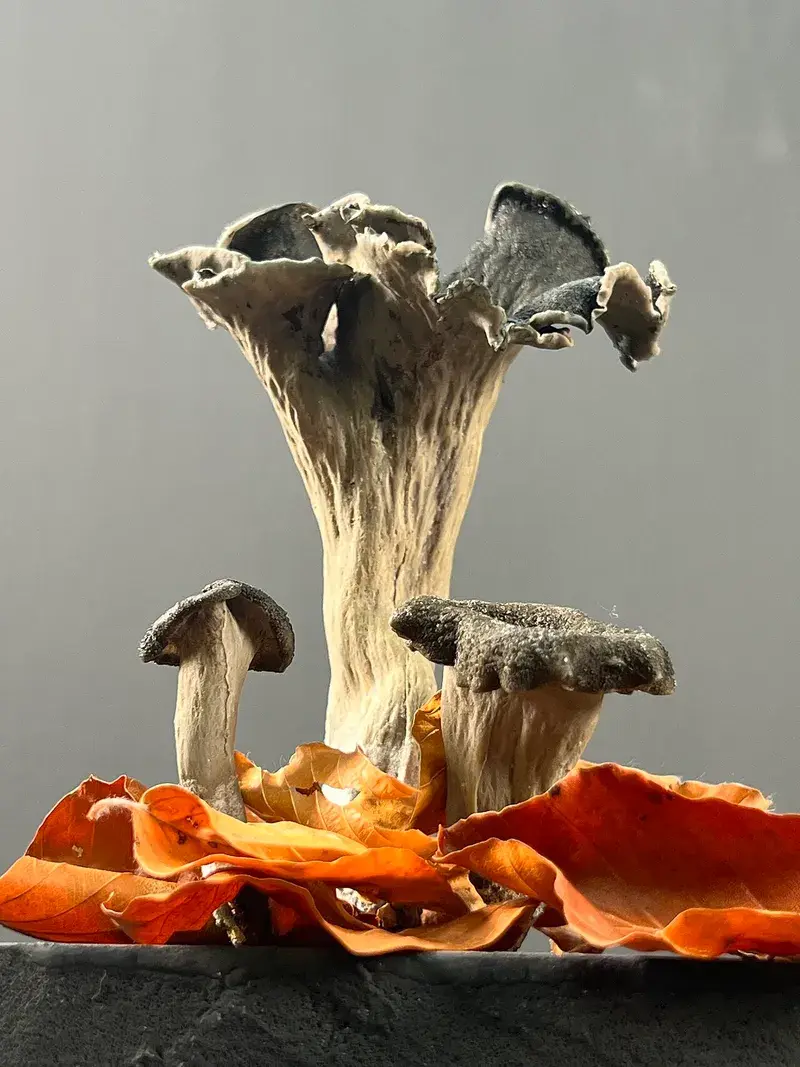

It is dark blackish brown to grey-black and has a smooth, grey underside. Craterellus sinuosus is light brown with a beige, veined underside. Also edible.
View on the map
No matching species found.
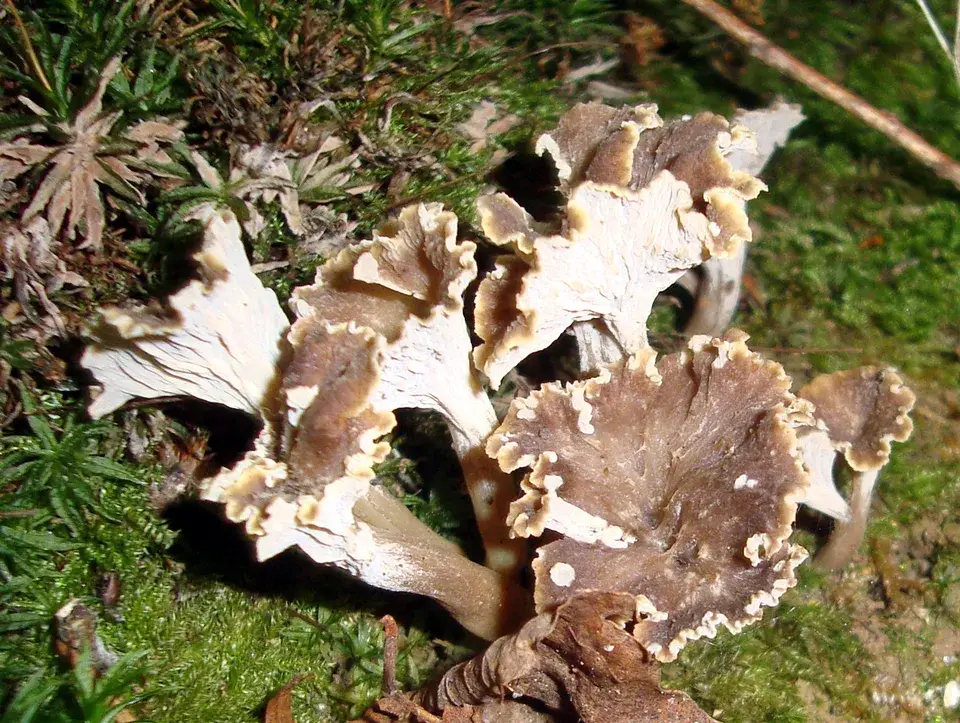
Craterellus sinuosus (Fr.) Maire · Hydnaceae
Craterellus sinuosus grows from August to November; host trees: mainly European beech, also oak and other deciduous trees. Edible, but only after a certain identification; this page does not replace an in-person check.
Map for this species Mushroom alert for this species How the mushroom alert works
Craterellus sinuosus is a small to medium-sized, light brown funnel-shaped mushroom with a frilly, wavy cap margin and a beige, veined underside. It grows mainly under European beech and is considered edible. It is declining because of nutrient inputs into forest soils.
Craterellus sinuosus is light brown with a frilly cap margin and a beige, veined underside. No poisonous look-alikes are known; the similar Craterellus species are edible.
It is dark blackish brown to grey-black and has a smooth, grey underside. Craterellus sinuosus is light brown with a beige, veined underside. Also edible.
View on the map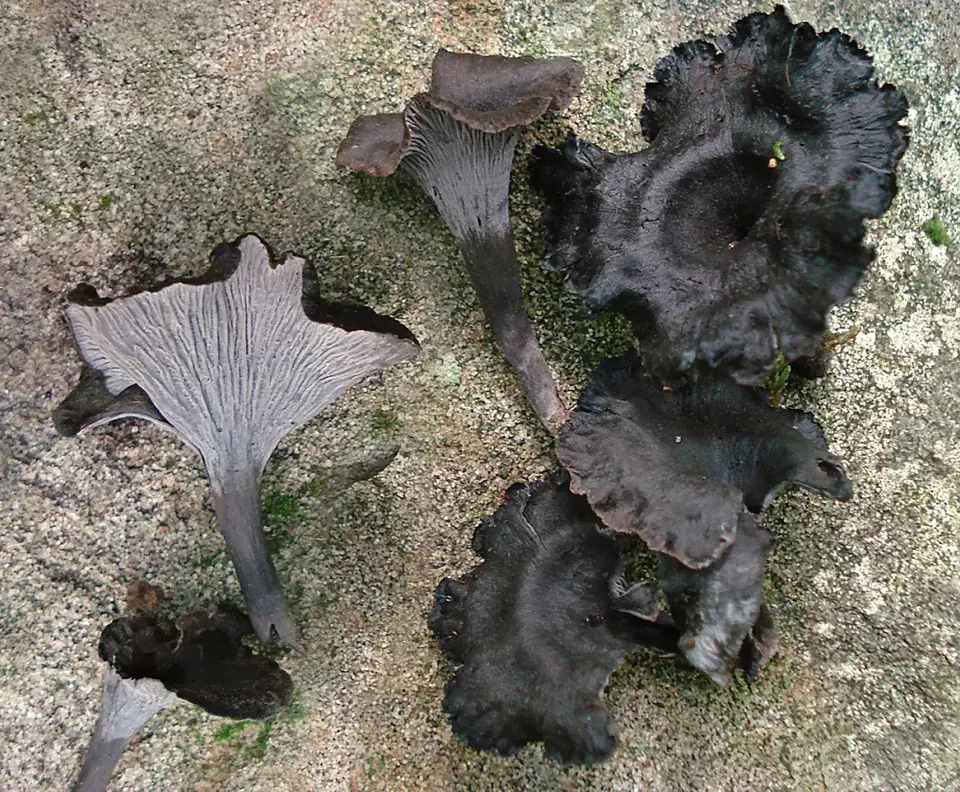
It is blackish brown to ash grey, has a smooth margin and forked grey ridges. The stem is grey without yellow tones. Also edible.
View on the map| Craterellus sinuosus | Horn of plenty | Ashen chanterelle | |
|---|---|---|---|
| Cap | light loam to sepia brown, funnel-shaped, margin frilly and wavy | blackish brown to grey-black, funnel-shaped | blackish brown to ash grey, smooth margin |
| Underside | beige to beige-brown, smooth when young, later veined | smooth to slightly wrinkled, greyish | forked, ash-grey ridges |
| Stem | hollow, sand yellow to brown-beige, grooved lengthways | hollow, merging into the cap | soot grey, no yellow tones |
| Flesh | thin, hollow | thin, brittle | thin, brittle |
| Edibility | Edible | edible | edible |
Moderately to distinctly damp, rather nutrient-poor soils, mainly in beech woods, more rarely in mixed oak woods. No reliable information.
Mainly European beech, also oak and other deciduous trees.
possible good main season
Rough estimate; the fruiting time depends on the weather.
The map shows every day where weather, soil and forest currently suit this species. The stronger the orange, the better the conditions. Grey means unsuitable. With the day slider you can look up to 13 days ahead. The map shows grid cells, not exact spots.
Map data: © OSM · CARTO · © Esri, Maxar, Earthstar Geographics, GIS User Community · Weather: Open-Meteo
See Craterellus sinuosus on the map
Mushroom forecast: where conditions are good for foraging now
There are no records per region for this species yet. The country pages lead to all regions with a daily forecast.
How good are the chances of finding this species where you are right now? We calculate it from weather, soil moisture, altitude and forest at your location.
Poison centre:
Emergency: 112 · 999
Poison centre:
Emergency: 112
Mushroom advice: DGfM: find a mushroom expert. Certified mushroom experts of the German Mycological Society (DGfM).
Collecting rules: Mushrooms that are not specially protected may be collected in small quantities for personal use unless a protected area or ban applies. Certain specially protected edible species (e.g. cep, chanterelle, birch bolete) may be collected in small quantities for personal use.
Poison centre:
Emergency: 112 · 144
Mushroom advice: Austrian Mycological Society (ÖMG): mushroom advice. Mushroom advice by the Austrian Mycological Society or regional services such as municipal market offices.
Collecting rules: At most 2 kg of mushrooms per person per day unless the forest owner has prohibited collecting; organised collecting events are prohibited. Additional state rules apply (collecting hours, closed seasons), e.g. Carinthia, Tyrol, Vorarlberg, Salzburg.
It is declining because of growing nutrient inputs into forest soils. Better to leave rare finds standing.
Fried or in sauces. The mushroom is thin-fleshed and hollow; cook it right through. Cook for at least 15 minutes.
No reliable information on drying.
Yes, it is considered edible. Like all wild mushrooms, it must be cooked thoroughly.
By the light brown, funnel-shaped cap with a frilly margin, the beige, veined underside and the hollow, sand-yellow to brown-beige stem.
The horn of plenty is dark blackish brown with a smooth grey underside; Craterellus sinuosus is light brown with a beige, veined underside.
As a mycorrhizal fungus, mainly with European beech, on damp, rather nutrient-poor soils in beech woods.
No substitute for having your finds checked in person. No guarantee of accuracy. Updated: 17.10.2026.
