
Lichen agarics Lichenomphalia spec.
inedible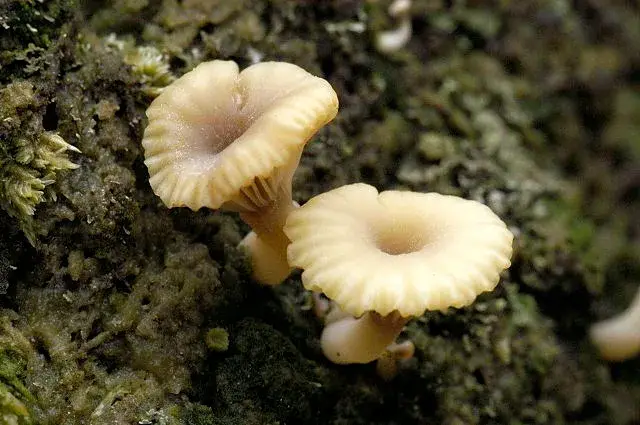

They have true, thin gills instead of ridges.
View on the map
No matching species found.
Craterellus tubaeformis (Fr.) Quél. · Hydnaceae
Also: Yellowfoot, Winter mushroom, Funnel chanterelle
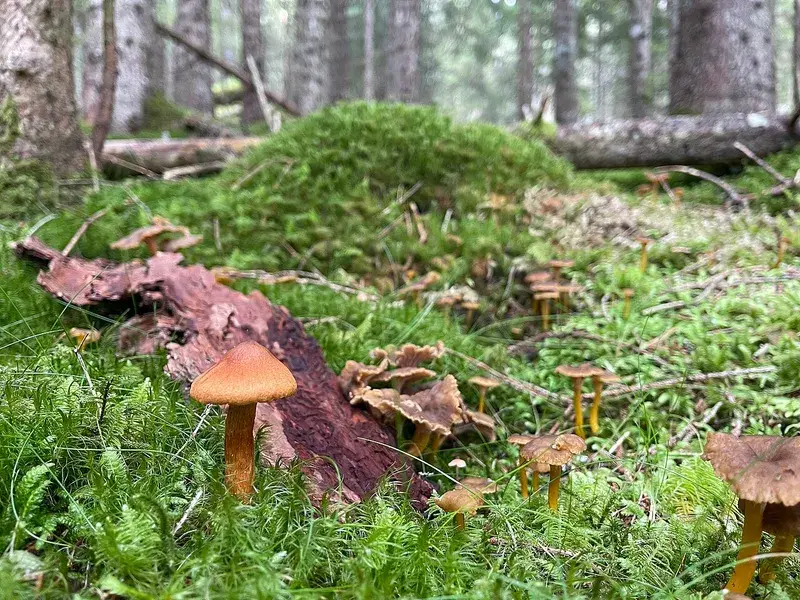
Winter chanterelle grows from August to November; host trees: spruce and fir, occasionally broadleaved trees. Edible, but only after a certain identification; this page does not replace an in-person check.
Map for this species Mushroom alert for this species How the mushroom alert works
The winter chanterelle is a small, funnel-shaped relative of the chanterelle with a brown-grey cap, grey ridges and a yellow, hollow stem. It often grows in large groups in damp coniferous woods.
It has grey ridges, no gills and no tubes.
They have true, thin gills instead of ridges.
View on the map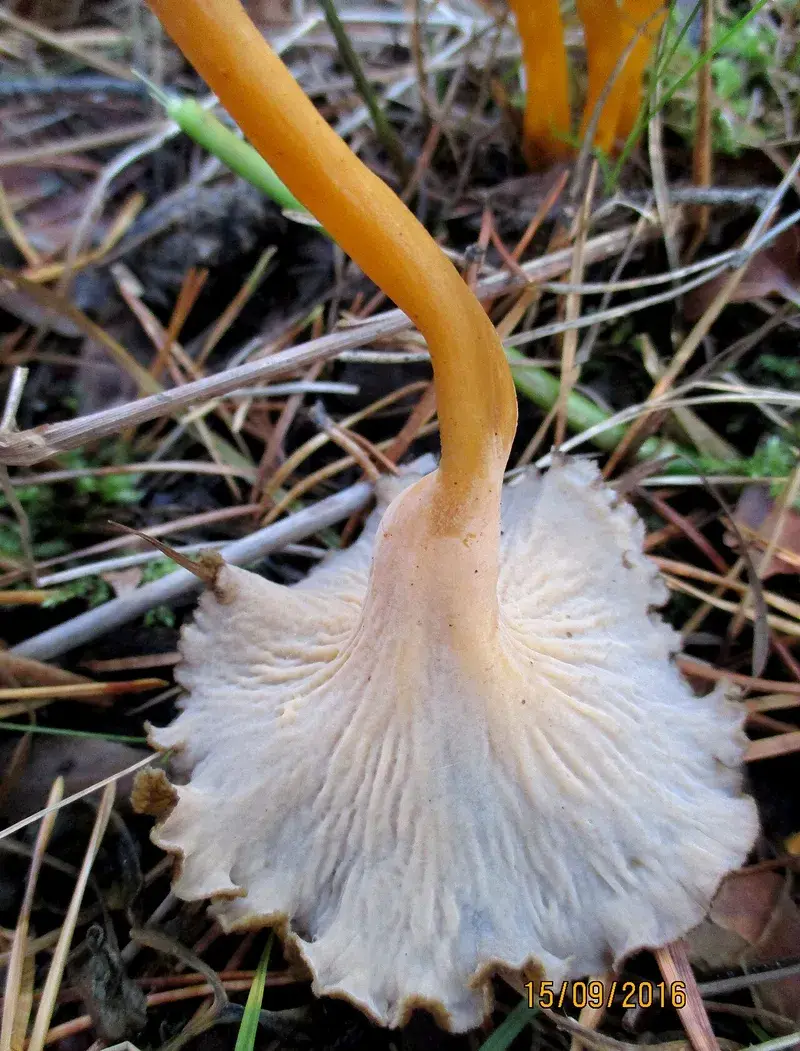
It has an almost smooth, orange to pink underside without clear ridges and smells strongly of mirabelle plums.
View on the map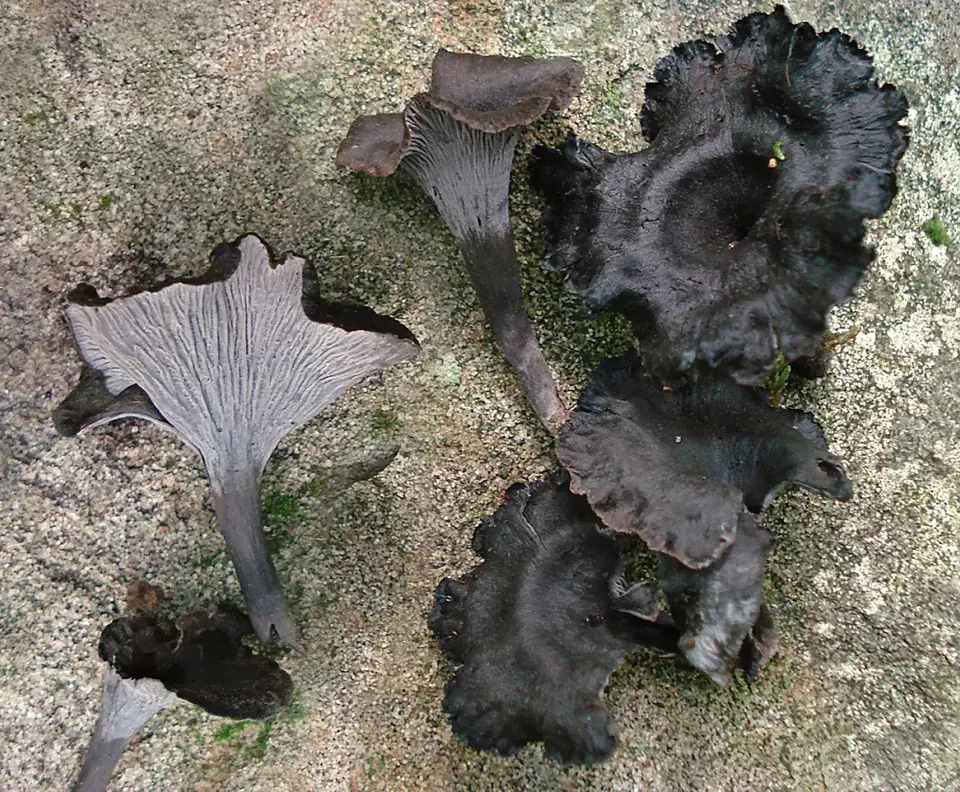
It is all grey to blackish, the stem too, and has clear ridges.
View on the mapAcidic, nutrient-poor, damp soils, often among moss. Mainly montane coniferous woods.
Spruce and fir, occasionally broadleaved trees.
possible good main season
In rainy weather as early as July.
The map shows every day where weather, soil and forest currently suit this species. The stronger the orange, the better the conditions. Grey means unsuitable. With the day slider you can look up to 13 days ahead. The map shows grid cells, not exact spots.
Map data: © OSM · CARTO · © Esri, Maxar, Earthstar Geographics, GIS User Community · Weather: Open-Meteo
See Winter chanterelle on the map
Mushroom forecast: where conditions are good for foraging now
There are no records per region for this species yet. The country pages lead to all regions with a daily forecast.
How good are the chances of finding this species where you are right now? We calculate it from weather, soil moisture, altitude and forest at your location.
Poison centre:
Emergency: 112 · 999
Poison centre:
Emergency: 112
Mushroom advice: DGfM: find a mushroom expert. Certified mushroom experts of the German Mycological Society (DGfM).
Collecting rules: Mushrooms that are not specially protected may be collected in small quantities for personal use unless a protected area or ban applies. Certain specially protected edible species (e.g. cep, chanterelle, birch bolete) may be collected in small quantities for personal use.
Poison centre:
Emergency: 112 · 144
Mushroom advice: Austrian Mycological Society (ÖMG): mushroom advice. Mushroom advice by the Austrian Mycological Society or regional services such as municipal market offices.
Collecting rules: At most 2 kg of mushrooms per person per day unless the forest owner has prohibited collecting; organised collecting events are prohibited. Additional state rules apply (collecting hours, closed seasons), e.g. Carinthia, Tyrol, Vorarlberg, Salzburg.
Whether the species, as a former Cantharellus, falls under the protection of Cantharellus spp. in BArtSchV Annex 1 needs to be clarified legally.
No species-specific rule known.
Red List Germany: Least concern
Fried, in sauces and mixed dishes. Cook thoroughly.
Very well suited.
Yes, it is considered an edible mushroom. Cook thoroughly. It has grey ridges, no gills and no tubes.
In Central Europe the season runs from August to November. In rainy weather as early as July. Tree partners and habitat: Spruce and fir, occasionally broadleaved trees. Soil: Acidic, nutrient-poor, damp soils, often among moss. Altitude: Mainly montane coniferous woods.
The most important one to rule out is Lichen agarics (Lichenomphalia spec., inedible): They have true, thin gills instead of ridges. Other look-alikes: Craterellus lutescens, Ashen chanterelle.
No substitute for having your finds checked in person. No guarantee of accuracy. Updated: 17.10.2026.

