
Hydnellum species Hydnellum spp.
inedible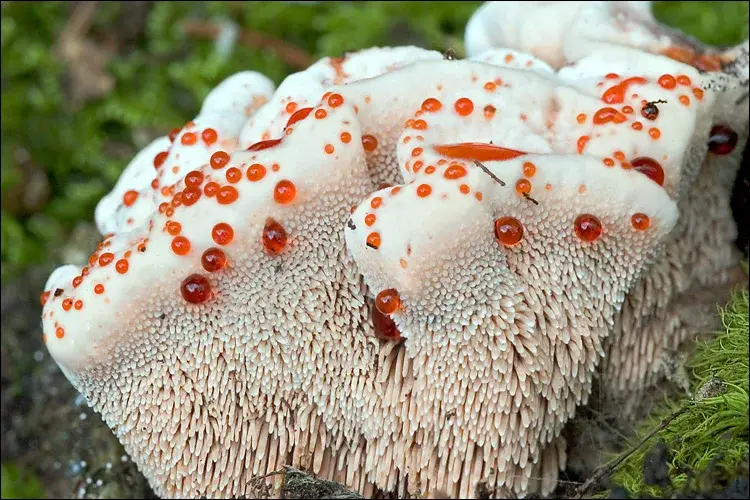

They are tough and corky, often grow fused together and have brown spines; young caps sometimes carry red drops. Inedible. Many species are rare and Red List species, so leave them standing.

No matching species found.
Hydnum repandum L. · Hydnaceae
Also: Sweet tooth, Hedgehog mushroom
Wood hedgehog grows from July to November; host trees: european beech, spruce and oak, also fir and pine. Edible, but only after a certain identification; this page does not replace an in-person check.
Map for this species Mushroom alert for this species How the mushroom alert works
The wood hedgehog is a fleshy, bun-yellow mushroom with whitish spines instead of gills under the cap. It is regarded as a good edible mushroom, rarely maggoty, and often grows in rows or rings in broadleaved and coniferous woods.
Instead of gills it has brittle, pale spines on the underside. The similar spine fungi are edible or inedible; with careful identification it is hardly confusable with dangerous poisonous mushrooms.
They are tough and corky, often grow fused together and have brown spines; young caps sometimes carry red drops. Inedible. Many species are rare and Red List species, so leave them standing.
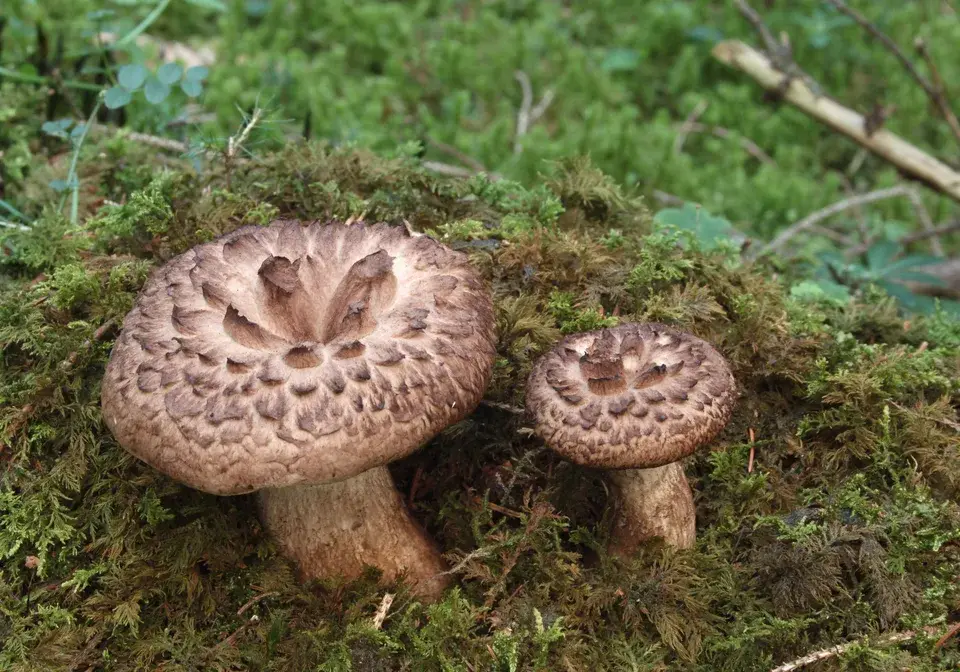
It has a brown cap with coarse, tile-like raised scales and grey-brown spines. Its food value is disputed, and it can cause stomach and bowel upsets.
View on the map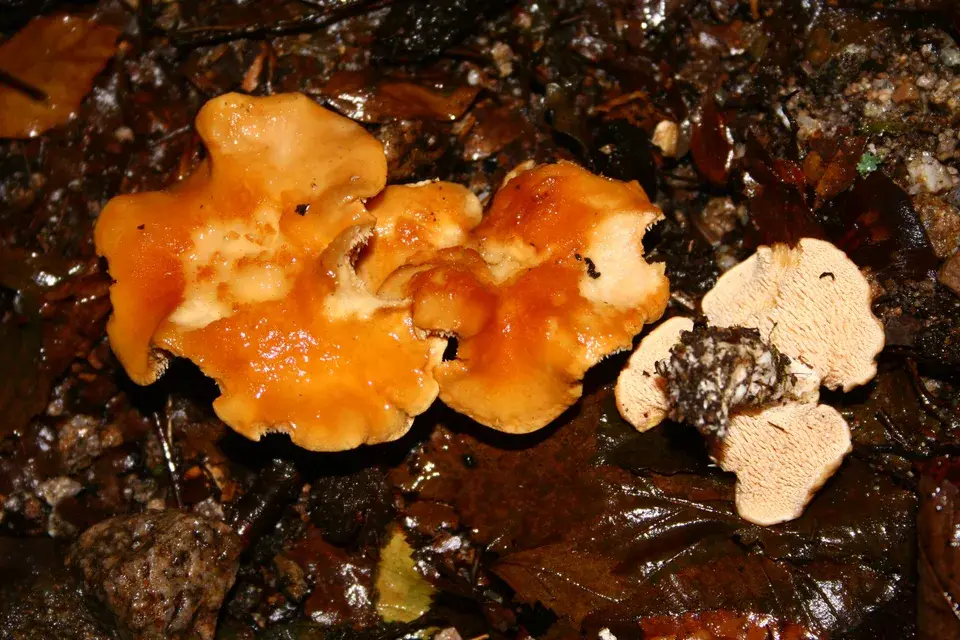
It is smaller and a strong orange-red, with a more slender, central stem. The surest feature: its spines do not run down the stem. Also edible.
View on the map
It has forked ridges instead of spines and smells fruity, of apricot. Also edible.
View on the map| Wood hedgehog | Hydnellum species | Scaly hedgehog | Terracotta hedgehog | Golden chanterelle | |
|---|---|---|---|---|---|
| Cap | wide, 3 to 15 cm | flat to funnel-shaped, brown | brown with coarse, raised scales, 5 to 20 cm | orange-red to red-brown, 2 to 6 cm | egg-yolk yellow, funnel-shaped |
| Underside | spines crowded, brittle, whitish to pale yellow | brown spines | grey-brown spines | pale spines, not decurrent | decurrent, forked ridges |
| Stem | short, thick, solid and whitish, often attached off-centre | short, corky | short, brownish | slender, central | same colour, solid |
| Flesh | flesh white, firm | flesh tough, corky | flesh firm, tough with age | flesh brittle | flesh firm, fibrous, fruity smell |
| Edibility | Edible | inedible | Food value disputed | edible | edible |
Both chalky and acidic soils in broadleaved and coniferous woods, often in rows or fairy rings. From the lowlands up to the montane zone.
European beech, spruce and oak, also fir and pine.
possible good main season
Main season in late summer and autumn, often until the first frosts.
The map shows every day where weather, soil and forest currently suit this species. The stronger the orange, the better the conditions. Grey means unsuitable. With the day slider you can look up to 13 days ahead. The map shows grid cells, not exact spots.
Map data: © OSM · CARTO · © Esri, Maxar, Earthstar Geographics, GIS User Community · Weather: Open-Meteo
Mushroom forecast: where conditions are good for foraging now
Regions with many documented records (GBIF). Each region page has the daily forecast.
How good are the chances of finding this species where you are right now? We calculate it from weather, soil moisture, altitude and forest at your location.
Poison centre:
Emergency: 112 · 999
Poison centre:
Emergency: 112
Mushroom advice: DGfM: find a mushroom expert. Certified mushroom experts of the German Mycological Society (DGfM).
Collecting rules: Mushrooms that are not specially protected may be collected in small quantities for personal use unless a protected area or ban applies. Certain specially protected edible species (e.g. cep, chanterelle, birch bolete) may be collected in small quantities for personal use.
Poison centre:
Emergency: 112 · 144
Mushroom advice: Austrian Mycological Society (ÖMG): mushroom advice. Mushroom advice by the Austrian Mycological Society or regional services such as municipal market offices.
Collecting rules: At most 2 kg of mushrooms per person per day unless the forest owner has prohibited collecting; organised collecting events are prohibited. Additional state rules apply (collecting hours, closed seasons), e.g. Carinthia, Tyrol, Vorarlberg, Salzburg.
Not specially protected.
Very good fried or in sauces when young; the flesh stays firm. With older specimens, scrape off the spines, as they taste bitter. Cook for at least 15 minutes.
It freezes well once briefly fried.
Yes, when young it is a good edible mushroom. Older specimens turn bitter; the spines can be scraped off. Like all wild mushrooms, eat it only well cooked.
From July to November in broadleaved and coniferous woods, mainly under European beech and spruce, often in rows or rings.
Most likely with the terracotta hedgehog, which is also edible; its spines do not run down the stem. The scaly hedgehog with its brown, scaly cap and the tough Hydnellum species are also similar. Dangerous poisonous mushrooms hardly resemble it, but the rule still applies: only eat mushrooms you have identified for certain.
No substitute for having your finds checked in person. No guarantee of accuracy. Updated: 17.10.2026.


