
Bitter bolete Tylopilus felleus
inedible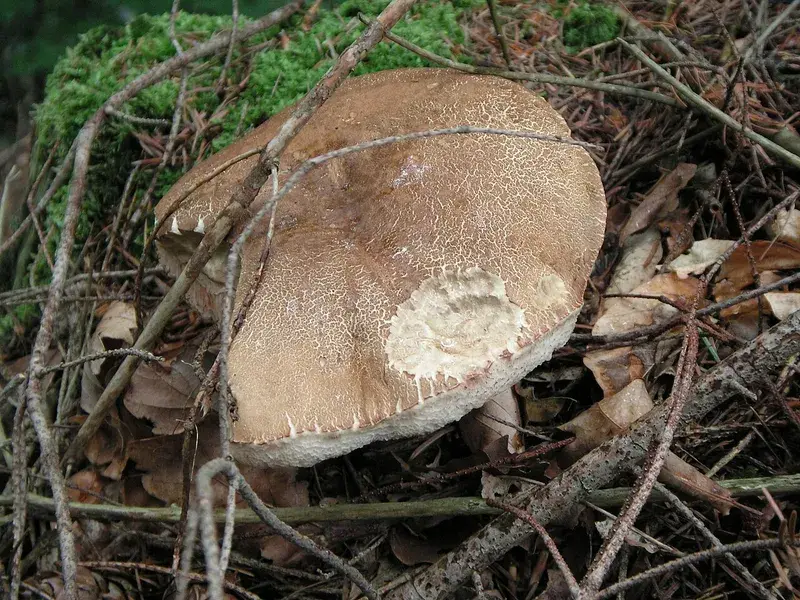

Its stem has a coarse, dark net instead of scales, the tubes turn pink, and it tastes bitter.
View on the map
No matching species found.
Leccinum scabrum (Bull.) Gray · Boletaceae
Also: Rough-stemmed bolete, Scaber stalk
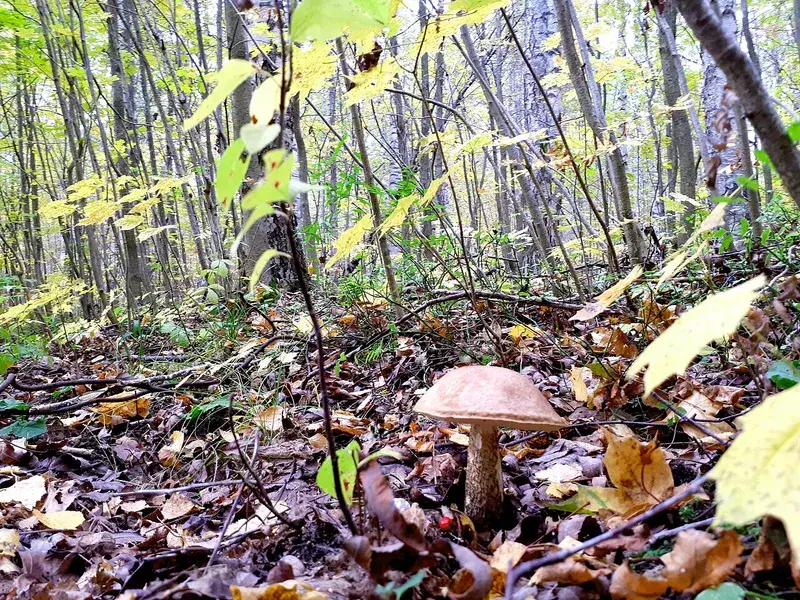
Birch bolete grows from June to October; host trees: birch. Edible, but only after a certain identification; this page does not replace an in-person check.
Map for this species Mushroom alert for this species How the mushroom alert works
The birch bolete is a bolete with a grey-brown cap and a white stem covered in black scales. It grows only with birch.
Eat only when well cooked; black-scaled scaber stalks are all edible in Central Europe, but bitter boletes have a net instead of scales.
Its stem has a coarse, dark net instead of scales, the tubes turn pink, and it tastes bitter.
View on the map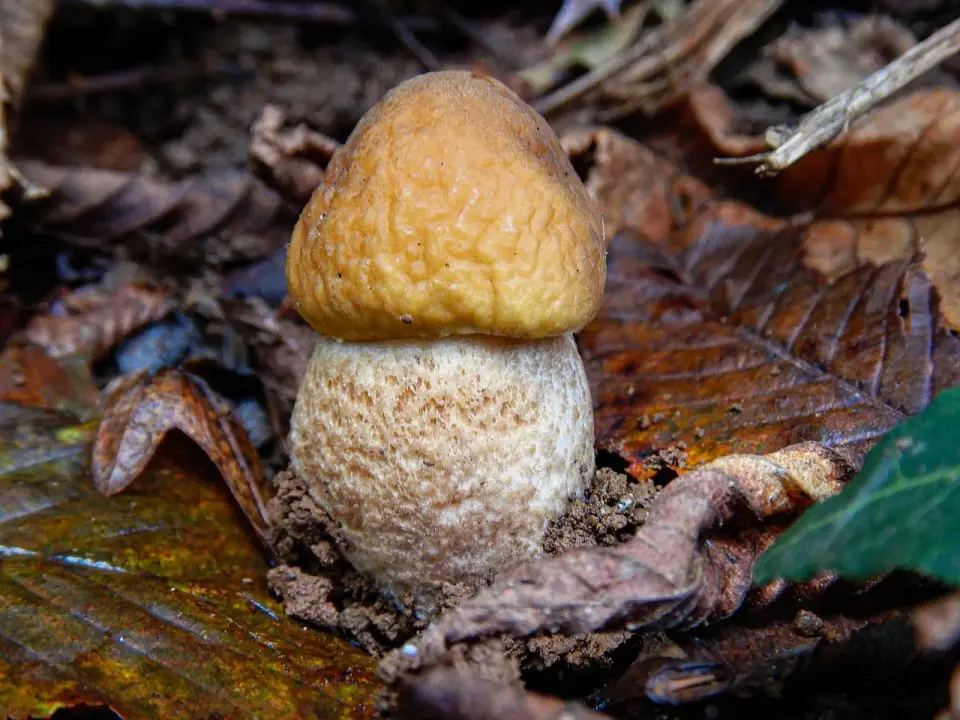
It grows with hornbeam and its flesh turns grey to black.
View on the map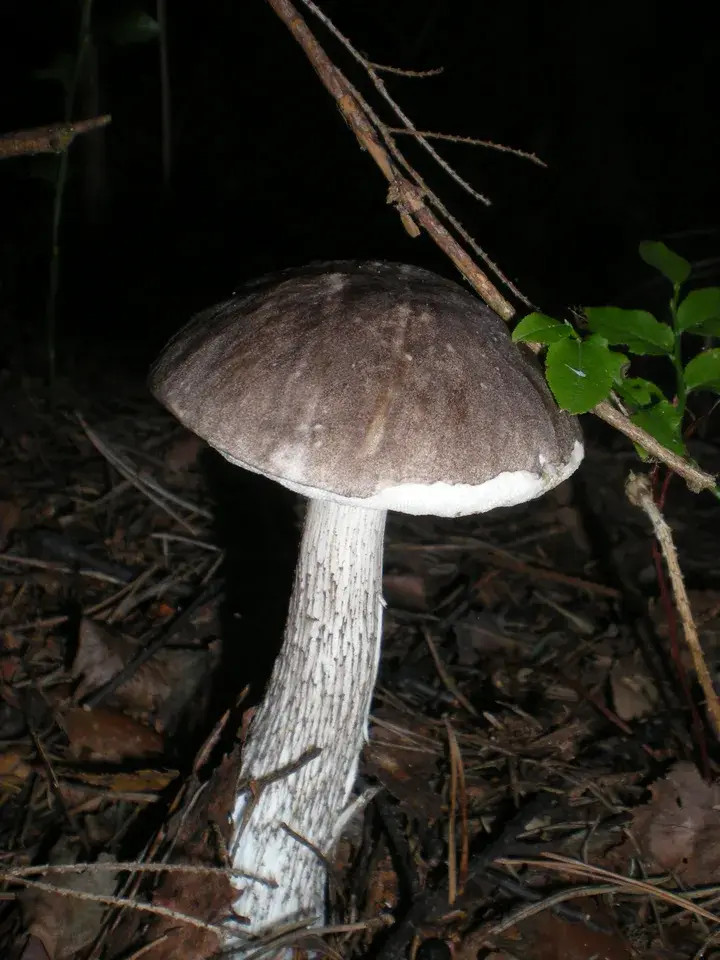
The base of its stem turns blue when cut.
View on the mapVarious soils, often acidic. Wherever birches grow.
Birch.
possible good main season
The map shows every day where weather, soil and forest currently suit this species. The stronger the orange, the better the conditions. Grey means unsuitable. With the day slider you can look up to 13 days ahead. The map shows grid cells, not exact spots.
Map data: © OSM · CARTO · © Esri, Maxar, Earthstar Geographics, GIS User Community · Weather: Open-Meteo
Mushroom forecast: where conditions are good for foraging now
There are no records per region for this species yet. The country pages lead to all regions with a daily forecast.
How good are the chances of finding this species where you are right now? We calculate it from weather, soil moisture, altitude and forest at your location.
Poison centre:
Emergency: 112 · 999
Poison centre:
Emergency: 112
Mushroom advice: DGfM: find a mushroom expert. Certified mushroom experts of the German Mycological Society (DGfM).
Collecting rules: Mushrooms that are not specially protected may be collected in small quantities for personal use unless a protected area or ban applies. Certain specially protected edible species (e.g. cep, chanterelle, birch bolete) may be collected in small quantities for personal use.
Poison centre:
Emergency: 112 · 144
Mushroom advice: Austrian Mycological Society (ÖMG): mushroom advice. Mushroom advice by the Austrian Mycological Society or regional services such as municipal market offices.
Collecting rules: At most 2 kg of mushrooms per person per day unless the forest owner has prohibited collecting; organised collecting events are prohibited. Additional state rules apply (collecting hours, closed seasons), e.g. Carinthia, Tyrol, Vorarlberg, Salzburg.
Specially protected under BArtSchV Annex 1 (Leccinum spp.); collecting small quantities for personal use is allowed under Section 2 BArtSchV.
No species-specific rule known.
Red List Germany: Least concern
Fry young specimens or use them in mixed dishes; the flesh turns dark when cooked. Cook thoroughly; raw, it is not tolerated.
Young caps are well suited. Leave old, spongy specimens standing.
Yes, it is considered an edible mushroom. Cook thoroughly; raw, it is not tolerated. Eat only when well cooked; black-scaled scaber stalks are all edible in Central Europe, but bitter boletes have a net instead of scales.
In Central Europe the season runs from June to October. Tree partners and habitat: Birch. Soil: Various soils, often acidic. Altitude: Wherever birches grow.
The most important one to rule out is Bitter bolete (Tylopilus felleus, inedible): Its stem has a coarse, dark net instead of scales, the tubes turn pink, and it tastes bitter. Other look-alikes: Hornbeam bolete, Mottled bolete.
No substitute for having your finds checked in person. No guarantee of accuracy. Updated: 17.10.2026.

